
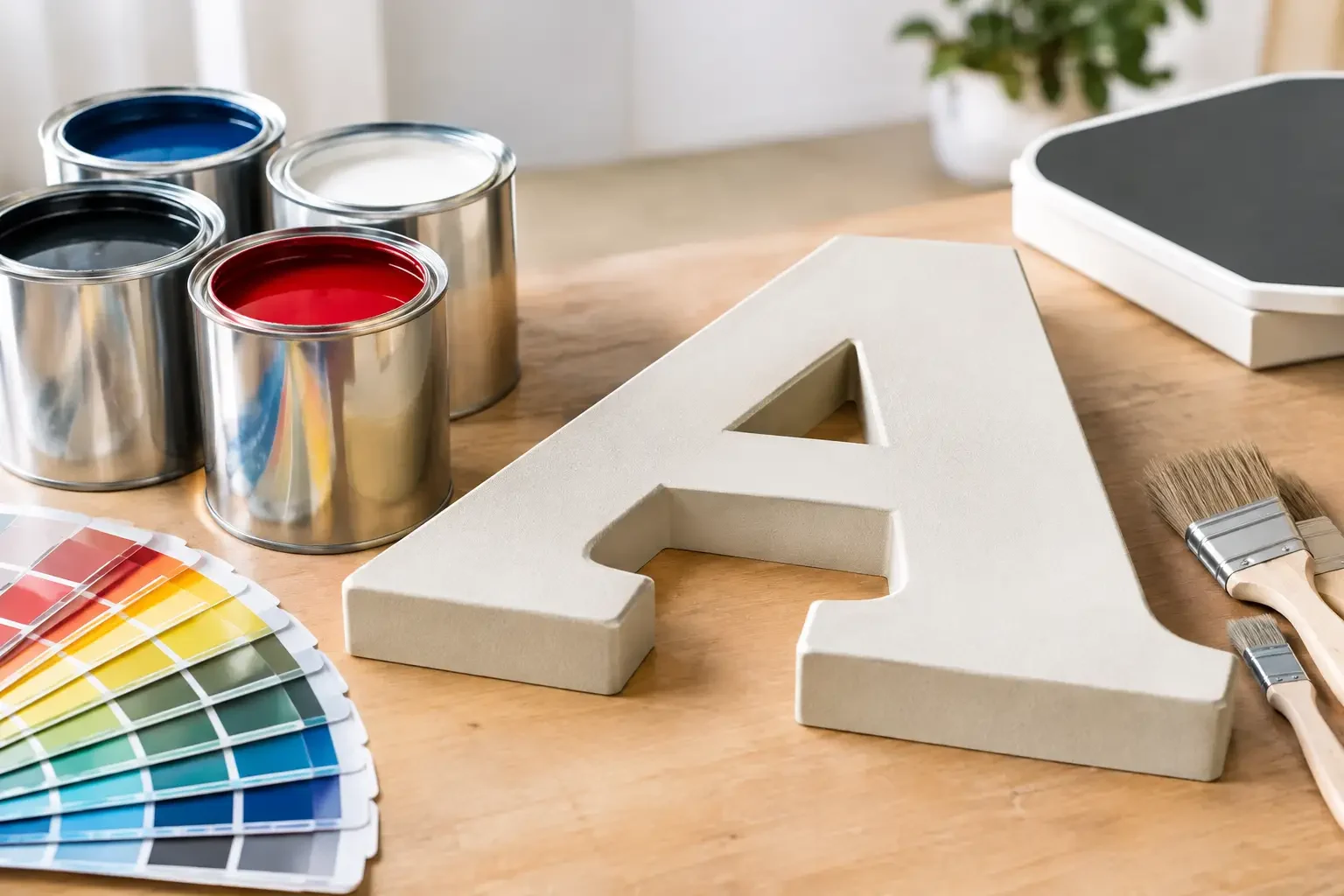
For an HDU sign, choose the primer and paint as a compatible system. The finish needs to suit the surface texture, carved detail, color and outdoor exposure, while preserving the edges and depth of the lettering.
Good preparation creates an even base for the paint. Apply enough coating to cover the surface without filling fine detail, and follow the manufacturer’s drying and curing instructions.
Best Paints for Urethane HDU: Start With the System
HDU is a closed-cell polyurethane foam that resists moisture absorption and does not rot like wood. A compatible primer and paint system is still needed for the intended finished appearance and exposure.
Acrylic latex coatings are the standard choice for many HDU sign applications. A high-quality exterior acrylic primer followed by premium 100% acrylic finish paint provides strong adhesion, good flexibility, practical field repairability, and reliable weather resistance. For routed panels, dimensional letters, sandblasted backgrounds, and carved copy, this is often the most production-efficient system.
Where the project calls for a harder, more chemical-resistant finish, a two-component polyurethane or other industrial-grade catalyzed topcoat may be appropriate. These coatings can deliver a tighter finish and better resistance to abrasion, cleaning chemicals, and harsh exposure. They also demand more from the production process: controlled mixing, pot-life management, spray equipment, ventilation, and trained finishing personnel.
The correct answer depends on the job. A retail monument sign with a textured background does not need the same coating specification as a smooth, high-visibility medical campus identifier or a sign installed in a coastal environment.
Exterior Acrylic Paint Is the Workhorse for HDU
For most exterior HDU signage, premium waterborne acrylic paint remains the practical workhorse. It is available in a wide range of colors and sheens, works well over compatible primers, and is more forgiving than catalyzed coatings when the sign includes routed returns, recessed copy, and textured surfaces.
Use paint specified for exterior architectural or sign applications, not low-grade interior wall paint. The difference shows up in resin quality, pigment load, ultraviolet resistance, film integrity, and long-term dirt pickup. Cheap paint may cover a panel initially but can create uneven sheen, early fading, or chalking that makes a commercial installation look underbuilt.
Acrylic systems are especially effective when the production plan includes hand finishing or field touch-up. This matters on multi-piece HDU assemblies, where copy, trim, borders, and panels may be finished separately before final assembly. A coating that can be matched and repaired without restarting the entire process protects schedule and reduces rework.
When Acrylic Is the Better Production Choice
Specify a quality exterior acrylic system when the sign has textured backgrounds, routed copy, sandblasted detail, moderate exposure, or a finish schedule that requires practical touch-up. It is also the sensible choice for repeatable wholesale production where coating consistency matters more than chasing an automotive-style surface.
For most architectural signs, a satin or low-luster finish is the best balance. It presents cleanly, limits glare, and disguises minor surface variation better than high gloss. Flat finishes can look appropriate on deeply textured backgrounds but tend to hold dirt and are harder to clean. Gloss finishes highlight every imperfection, including sanding marks, fill work, and uneven film build around letters.
Two-Component Polyurethane Coatings for Severe Duty
Two-component polyurethane coatings are often considered when the sign requires a premium smooth finish or will face more demanding service conditions. These systems cure into a harder film than typical architectural acrylics and can offer excellent resistance to abrasion, staining, and repeated cleaning.
They are not automatically the best paints for urethane in every shop. A catalyzed coating is only as good as its mixing accuracy, spray environment, cure control, and substrate preparation. If the finisher cannot maintain those controls, a proven acrylic system will often outperform a poorly applied industrial coating.
Use two-component finishes selectively. They make sense for smooth HDU faces, high-traffic wayfinding, corporate identity signs where color uniformity is critical, and applications that must coordinate visually with painted aluminum, steel, or fabricated trim. On highly textured faces, the added expense may not produce a meaningful visual or performance gain.
If a catalyzed system is specified, confirm the complete coating schedule with the manufacturer. Primer, reducer, activator, film thickness, recoat window, and cure time are system requirements, not suggestions. Do not mix a generic primer with a premium urethane topcoat and assume compatibility because both products are labeled exterior grade.
Primer Controls the Finished Appearance
Primer is where HDU finishing either becomes repeatable or becomes expensive. Even though HDU does not absorb water like wood, raw routed faces, sanding variations, and small surface voids can show through a finish coat. A proper primer creates a uniform base, improves topcoat adhesion, and reduces visible differences between smooth faces, routed edges, and filled areas.
Use a primer approved for urethane foam or for the exact HDU product being fabricated. Waterborne acrylic primers are common and effective for standard sign production. High-build primers can be useful when a smooth, paint-grade face is required, but they must be applied carefully. Excessive build can soften sharp corners, fill fine routed detail, and create a rounded appearance on small copy.
Sand between coats where the specification calls for it, especially on smooth panels and raised letters. The goal is not to sand aggressively into the HDU. The goal is to remove nibs, level filled areas, and create a consistent surface for the next coat. Fine dimensional detail should be protected through controlled spray passes rather than buried under coating.
Texture, Letter Depth, and Color Change the Coating Plan
The substrate shape matters as much as the paint label. A faux woodgrain HDU panel needs a coating approach that preserves texture and contrast. A smooth cabinet face with raised HDU lettering needs a finish that does not bridge at the letter returns. A deeply carved sign can trap overspray and leave thin coverage in recesses if the spray sequence is not planned.
Dark colors deserve extra attention. They absorb more heat, make surface defects more visible, and can expose thin coverage on edges and routed pockets. Apply multiple controlled coats rather than attempting heavy coverage in one pass. Heavy application raises the risk of sags, loss of detail, and extended cure time.
For multi-color work, sequence the job around masking access and cure windows. Finish recessed backgrounds before raised copy when practical. On separate dimensional letters, complete the back and returns before the face so the visible front surface remains clean. This is basic production discipline, but it prevents touch-up work that consumes labor after the sign should already be crated.
Avoid Solvent and Adhesion Problems Before They Start
Not every solvent-borne coating is incompatible with HDU, but solvent strength, dwell time, and application volume matter. Aggressive solvents can attack foam surfaces, especially on low-density materials, damaged areas, or exposed cut edges. A coating system that works on metal or wood should never be assumed safe for urethane without verification.
Test the actual primer, filler, topcoat, and thinner combination on an offcut before releasing production. This is particularly important when using unfamiliar automotive, industrial, or specialty coatings. Inspect for softening, pitting, poor adhesion, excessive texture loss, or a delayed reaction after cure.
Adhesion failures are often process failures rather than paint failures. Dust from routing, residue from handling, silicone contamination, unfilled voids, moisture on the surface, or an ignored recoat window can all compromise a finish. Clean the work thoroughly, use compatible fillers, and keep the coating sequence documented for repeat orders.
Build a Finish Specification, Not a Paint Shopping List
For sign shops, brokers, and commercial buyers, the most reliable purchasing document identifies more than a color. It should define the HDU density and texture, primer type, topcoat chemistry, sheen, number of coats, masking requirements, and whether letters are finished separately or assembled before paint. It should also identify which surfaces are visible after installation and which are protected by construction.
A written finish specification helps you order matching signs later. Share the color, sheen, texture and location with us when requesting a quote, and confirm those details before approving the sign for manufacture.
Choose the coating system before routing begins, and test unfamiliar products on an offcut. For a special finish, agree how its appearance will be approved before manufacture.