
CNC routing a custom HDU sign
Watch our CNC router shape an HDU panel.
Send the artwork and receive an accurately machined panel ready for your finishing workflow or completed to the approved paint specification.
Send your artwork, size, thickness and finish requirements. We can quote raw, primed or finished routed panels for individual projects or trade production.
See genuine routing, carving and completed dimensional sign details. Tap any video to watch.
Watch our CNC router shape an HDU panel.
A close look at CNC routing during production.
See an HDU sign panel being routed in our shop.
Removing the background leaves the letters or border proud of the sign face. Show which elements stay raised and the depth of the surrounding pocket.
Letters and lines cut into the face produce a different shadow and paint layout. Send the smallest lettering size and identify every recessed area.
Woodgrain, pebble and separate lettering layers change both appearance and construction. Use a gallery example to show the depth and finish you prefer.
Our standard maximum panel is 5 × 10 feet. A larger sign can need joined sections or layered construction. The quote and proof should show the finished size, seam position, reinforcement and mounting provisions before cutting. Shipping is included in your quoted price.
Before routing begins, we review cutter diameter, corner radius, background depth, copy thickness, border strength and mounting requirements against the approved artwork.
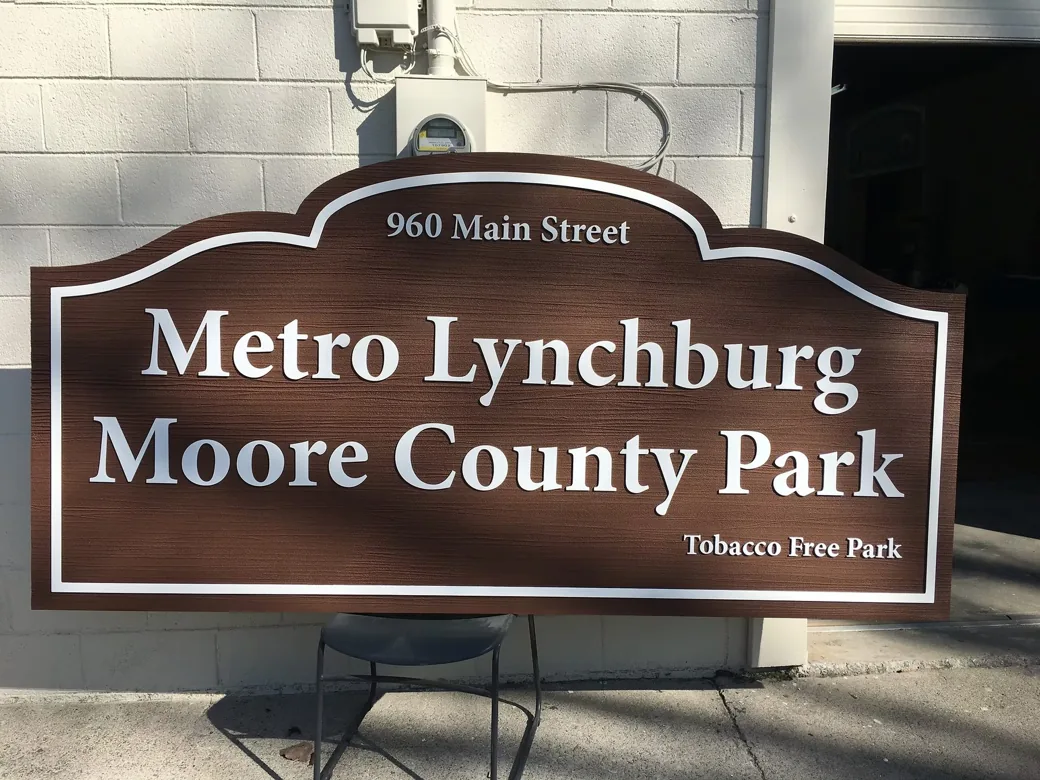
Create dimensional contrast with raised letters and logos, recessed backgrounds, V-carved lines or layered applied components.
Cut the outside shape, radius the corners, add routed borders and prepare the panel to fit an existing frame or monument opening.
Receive a machined panel for in-house completion or order primer, commercial paint and assembly as part of the scope.
The smallest inside corner is controlled by the cutter diameter, and the narrowest raised stroke must remain strong enough to survive machining, sanding, shipping and installation. Fine artwork may need to be enlarged, simplified or split into applied pieces. Those changes keep narrow strokes, inside corners and projecting details strong enough for machining, shipping and installation.
Whenever possible, a sign face should be cut from one piece of board. Oversized work may require a planned seam, internal frame, backing plate or multi-part assembly. The seam location should follow the artwork and structure rather than being chosen only for material convenience. Shipping size, installation access and the support frame also affect the best panel breakdown.
Some sign shops want a smooth primed surface for in-house paint. Others need recessed areas masked, applied acrylic pieces located or a digital print area kept flat. The quote should identify which surfaces will receive graphics and where hardware or alignment marks are needed. A panel built for paint alone may be prepared differently from one that will receive large adhesive films or second-surface elements.
Confirm vector quality, copy size, outside profile and dimensional relationships.
Match thickness to panel size, relief depth, mounting and desired visual weight.
Identify V-carves, pockets, raised areas, borders, textures and separate overlays.
Verify dimensions, spelling, colors and component locations.
Machining, sanding, priming and paint are completed according to the quote.
Finished faces and loose elements are protected and labeled for the receiving shop or installer.
Include dimensions, thickness, quantity, artwork, finish level, mounting requirements and the delivery ZIP code.
AI, EPS, SVG, DXF and clean vector PDF files are preferred. Fonts should be outlined, paths should be closed, and the drawing should include a reliable scale or dimensions.
Yes. Double-sided panels require careful registration, thickness planning and support during machining. The quote should identify whether the two sides are identical or different.
Applied components can be quoted when the material, thickness, color and attachment method are defined. Separate components may also ship loose for your shop to install.
Yes. Routed and textured backgrounds can create a traditional carved appearance. The selected pattern should support the copy size and intended viewing distance.
The practical size depends on the available board, machine area, panel thickness, shipping limitations and installation plan. Oversized work is reviewed individually.
Yes. Provide exact opening dimensions, photographs, the old panel if practical, and any hardware locations. Do not rely only on the visible copy size.
We quote custom fabrication from the specifications you provide. Include overall dimensions, thickness, quantity, whether the project should ship raw, primed or finished, and the delivery ZIP code. Sign shops may upload vector artwork; commercial buyers may send a logo, drawing or clear photograph for review.
Production desk: 888-539-1114
Email: sales@urbanfreshservices.net
Custom work is manufactured to order. Installation is not included unless specifically written into a separate local proposal.
Businesses and property owners typically request custom routed outdoor signs, carved logos or entrance panels. Sign shops may order unfinished routed HDU panels for their own finishing. See finished routed and dimensional sign projects, compare entrance signs and review delivered-quote factors. Send your drawing and dimensions to begin.