
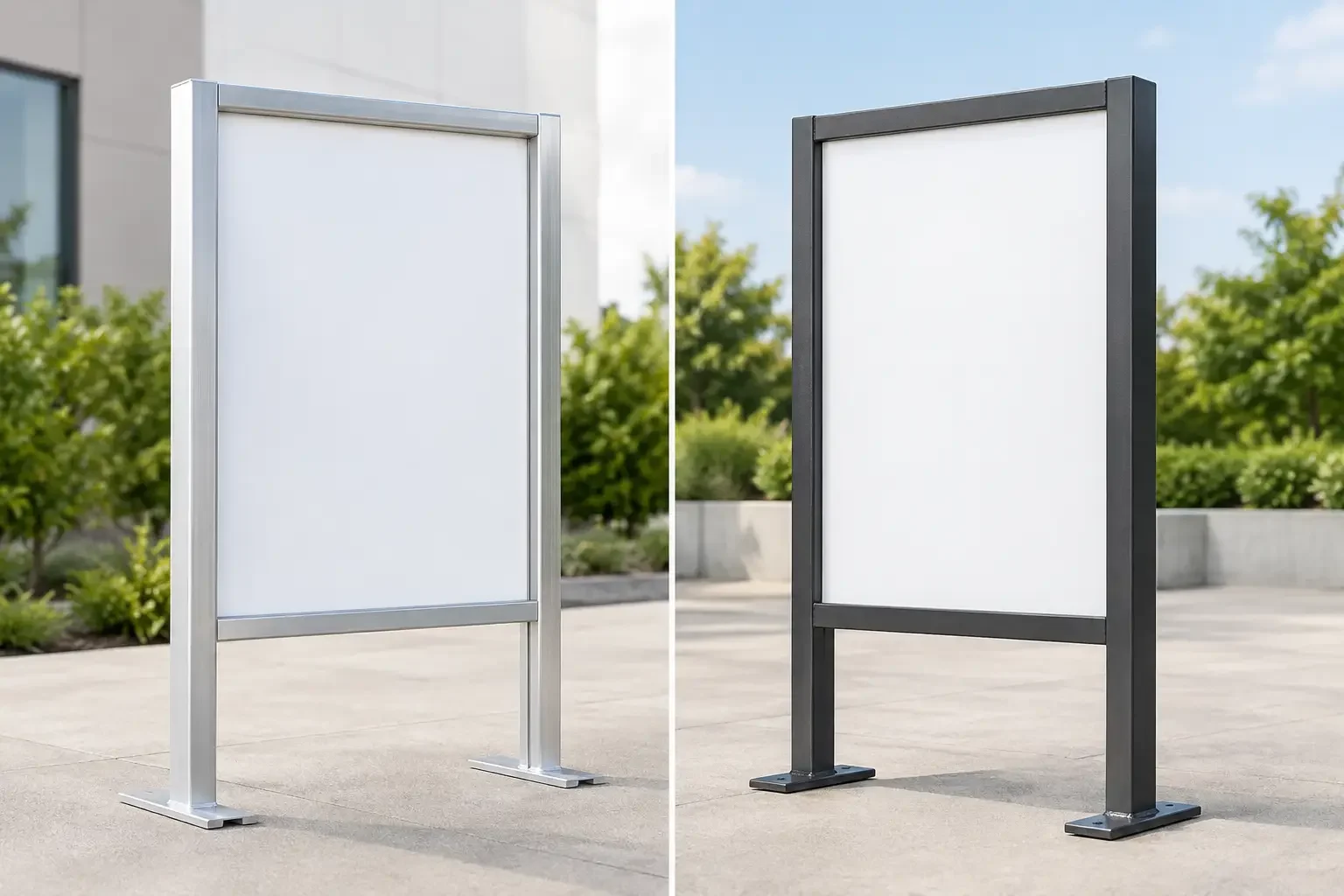
Aluminum and steel can both be used for sign frames. Choosing between them means weighing the sign’s size, span, weight and exposure, along with corrosion protection and the installation method. A qualified installer or engineer should confirm the frame and anchorage required for your site.
Aluminum is lighter and often useful where handling weight and corrosion matter. Steel can suit heavier loads and longer spans, with appropriate corrosion protection. The frame design and connections matter as much as the metal itself.
Aluminum Versus Steel Sign Frames: The Structural Difference
Steel has a clear advantage in stiffness and strength per section size. A steel tube frame can carry significant panel weight, resist bending across wide spans, and hold geometry under wind loading without requiring oversized members. That matters on large monument cabinets, multi-tenant directories, heavy dimensional letter backers, and signs with deep faces or substantial internal components.
Aluminum is lighter and naturally corrosion-resistant, but it has a lower modulus of elasticity than steel. In practical fabrication terms, an aluminum frame often needs larger tube dimensions, closer crossmembers, or additional gusseting to achieve comparable rigidity. Using the same wall thickness and tube size as a steel design is not a material substitution. It is a shortcut that can produce flex, oil-canning, distorted faces, and alignment issues at installation.
HDU is lightweight and resists moisture absorption, but the frame must support the complete sign assembly. Raised letters, lighting, posts and decorative elements all contribute loads. Have your installer or engineer review the full assembly and site exposure before selecting the frame.
When Steel Is the Better Structural Call
Steel is typically the right material when the project involves long unsupported spans, tall freestanding signs, high-wind exposure, unusually heavy faces, or substantial cantilever loads. It is also a practical choice when the frame will be buried within a monument base or otherwise protected from direct weather.
Steel fabrication is familiar to most structural installers. It can be cut, welded, drilled, and modified in the field when site conditions differ from the approved drawings. That field flexibility has value on commercial construction sites, where foundations, embeds, and existing conditions are not always as clean as the plans suggest.
The trade-off is corrosion control. Bare steel is not an exterior sign-frame specification. It needs a protective system appropriate to the environment: hot-dip galvanizing, a quality primer and topcoat system, or both. Welds, cut ends, drilled holes, and field modifications require special attention because those areas are where coating failure starts.
Where Aluminum Performs Best
Aluminum is a strong choice for exterior frames exposed to rain, humidity, coastal air, or irrigation overspray. It does not rust like carbon steel, and its lighter weight reduces handling risk during fabrication, shipping, and installation. For non-structural trim frames, panel retainers, cabinet skins, light-duty backers, and many wall-mounted HDU systems, aluminum is often the efficient material.
It also supports clean finish work. Powder coating and wet paint can produce durable architectural color when surface preparation and pretreatment are handled correctly. Aluminum is especially useful where exposed frame edges are part of the visual design and where the sign must maintain a clean appearance with limited maintenance.
Corrosion resistance does not mean aluminum is maintenance-free or immune to damage. In coastal environments, aluminum can develop pitting. Contact with dissimilar metals can create galvanic corrosion, particularly when moisture is present. A frame built with aluminum components, carbon-steel fasteners, and no isolation strategy is inviting a preventable problem.
Corrosion Is a System Issue, Not a Material Label
A fabricated frame is more than its tube stock. Weld seams, fasteners, brackets, drainage points, finish edges, and connections to posts all determine service life. Buyers who ask only whether a frame is aluminum or steel are asking an incomplete question.
For steel, specify the coating process and the expected exposure. A painted steel frame may perform well in a covered commercial entry, but it is not equivalent to galvanized steel on an exposed roadside monument in a humid region. If the project will see road salt, standing water, or coastal conditions, coating selection should be treated as part of the structural package rather than an afterthought.
For aluminum, isolate dissimilar metals where needed. Use compatible fasteners, nonconductive washers or barrier materials, and details that prevent trapped water. Drainage is equally important. A well-finished frame with no exit path for water can corrode from the inside out, regardless of material.
HDU panels help reduce one common exterior-sign failure point because they do not rot, swell, or delaminate like wood-based substrates. Still, the frame must keep the panel properly supported and allow for thermal movement. Over-tightening fasteners or locking a large panel rigidly into a frame can create stress as materials expand and contract at different rates.
Weight, Freight, and Installation Labor
Aluminum's lower weight is not merely a shipping advantage. It changes the handling plan. Lighter frames can often be moved with smaller crews, require less lifting equipment, and reduce the chance of damage while loading or positioning a sign. On multi-location programs, those savings can compound across dozens of installations.
Steel can increase freight cost and installation labor, particularly on large welded assemblies. Yet a heavier frame may reduce the need for extra members, oversized sections, or complex reinforcement. The installed cost is what matters, not the material price per foot. A low-cost aluminum design that requires extensive bracing and careful handling may not be less expensive than a simpler steel assembly.
For nationwide shipping, frame geometry matters as much as weight. Long welded frames can increase crate size, create oversize freight issues, and be vulnerable to forklift damage. Where the sign design allows, a bolt-together system can improve freight efficiency and simplify site handling. That approach requires precise hole placement, clearly identified components, and connection details that do not leave the installer improvising in the field.
Fabrication and Finish Requirements
Steel is generally more forgiving for heavy welded fabrication. It tolerates high-heat joining, accepts substantial brackets and gussets, and works well when a frame must integrate with structural posts or base plates. However, weld distortion must be controlled. A frame that leaves the welding table out of square will transfer that error into every attached sign component.
Aluminum requires more disciplined welding practice. Heat can distort thin-wall aluminum quickly, and weld appearance may matter if the frame remains visible. Mechanical assembly, formed channels, or purpose-built extrusion can be better alternatives for some aluminum projects. They can also support repeatable production when the same sign format is manufactured across a franchise or development program.
Finish requirements should be established before fabrication begins. If a frame will be visible, specify the final color, gloss level, texture, edge treatment, and allowable weld appearance. If it will be concealed behind HDU, prioritize structural protection and serviceability instead. There is no reason to pay for architectural finish quality on components no one will see, but there is every reason to protect them from moisture and corrosion.
Specify the Frame Around the Actual Installation
The best frame starts with the site conditions and installation method. A wall-mounted HDU sign may need aluminum rails that distribute load into known structural blocking. A freestanding panel may need a galvanized steel internal skeleton tied to engineered posts. A decorative monument can use a steel core for strength with aluminum trim where exposed edges need a refined finish.
Ask for the sign dimensions, panel thickness, finished weight, wind exposure, post spacing, attachment locations, electrical requirements, and whether the frame is exposed or concealed. Also identify the finish environment: dry inland, humid Southern climate, coastal zone, snow and road-salt exposure, or irrigated landscape. These details allow a fabricator to build an install-ready system instead of guessing from a face-size measurement.
We manufacture HDU sign faces and dimensional components. Have your installer or engineer specify the supporting frame and confirm how the sign will attach to it, then send us the relevant dimensions before manufacture. Structural design and installation are not included in our sign quote.
Before ordering a frame, ask your installer to check anchor locations, lifting access, connections and site exposure. Resolving those details early makes it easier to match the finished sign to its support.