
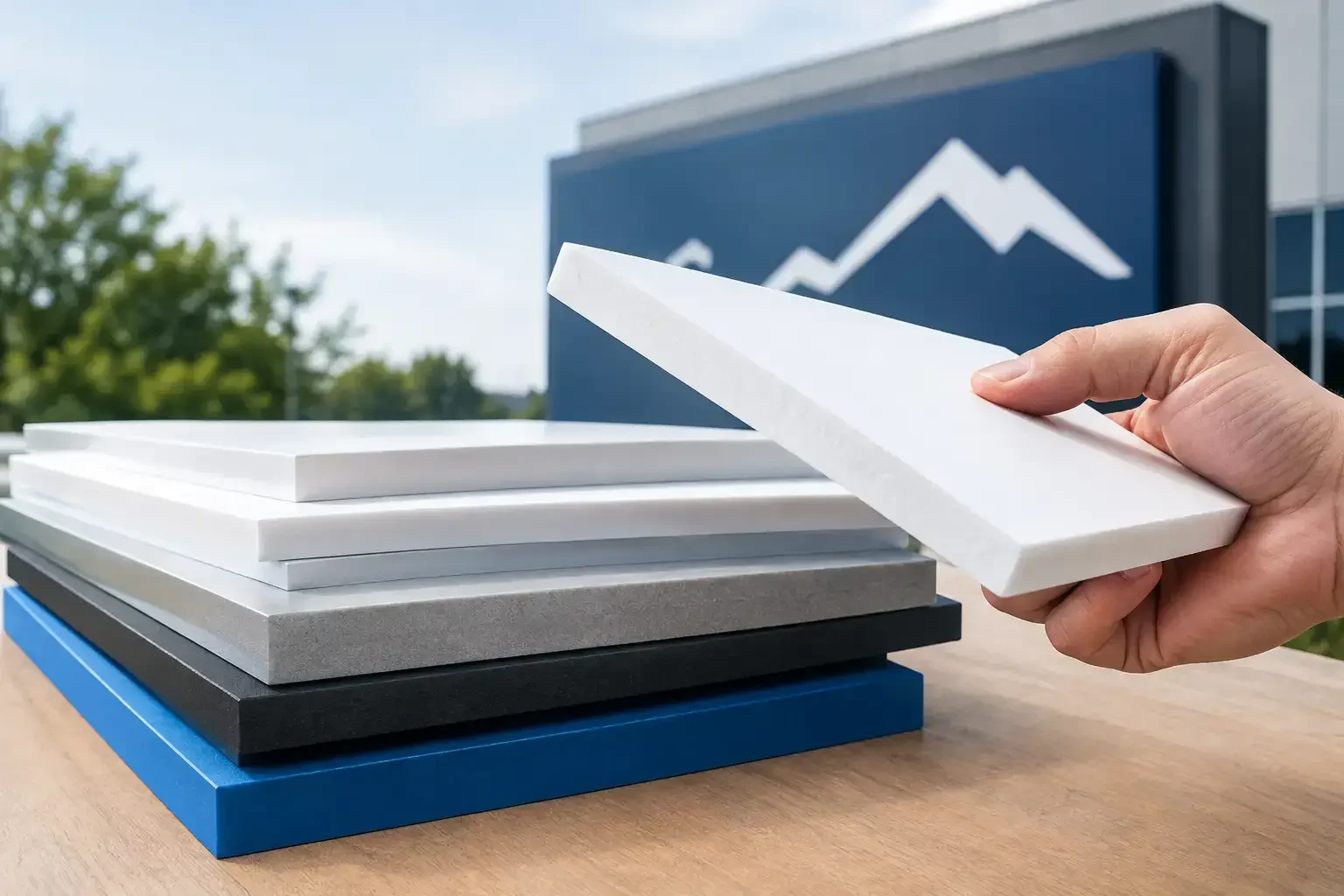
A 1-inch HDU panel may be the right answer for one monument sign and a costly failure on the next project. Knowing how to specify HDU thickness means looking beyond the face design and matching the material section to panel geometry, mounting method, routing depth, exposure, and handling requirements. Thickness is not an aesthetic afterthought. It directly affects stiffness, fabrication limits, hardware selection, freight risk, and the long-term appearance of the installation.
For trade buyers, the goal is not simply to order the thickest panel available. It is to specify enough material for stable, repeatable production without adding unnecessary weight, cost, or installation complexity.
Start With the Sign's Structural Role
HDU is a closed-cell urethane substrate with excellent resistance to moisture and decay, but it is not structural steel. A thick HDU panel can provide a substantial, carved architectural appearance, yet large-format panels still require a sound mounting strategy and, in many cases, internal or rear-mounted reinforcement.
The first question is whether HDU is functioning as a decorative face, a freestanding panel, a routed dimensional letter set, or a component within a larger fabricated sign system. A 0.75-inch letter mounted to a rigid ACM or metal background is supported differently than a 4-foot by 8-foot sandblasted HDU panel mounted between posts.
Panel span matters as much as overall square footage. A wide panel supported only at its ends can flex even when it is relatively short in height. A panel fastened consistently along a perimeter frame carries load more effectively than one attached at a few isolated points. Before assigning thickness, identify where the sign is supported, how far the unsupported areas extend, and whether the face will encounter wind, vibration, or impact exposure.
Common HDU Thickness Ranges and Their Uses
HDU thickness should be selected as a production specification, not a generic product choice. The following ranges are commonly used in commercial sign fabrication.
0.5-inch and 0.75-inch HDU
These thinner sheets work well for flat-cut letters, logos, plaques, interior architectural elements, and layered sign faces that are fully supported by a stable substrate. They are also practical when a project needs shallow dimensional relief without excessive projection from the wall.
For exterior letters, 0.75-inch HDU often provides a better appearance and more reliable stud attachment than 0.5-inch material, particularly on larger copy. However, letter height, stroke width, and installation surface still control the final decision. Thin strokes and small serifs can be vulnerable regardless of overall thickness.
1-inch HDU
One-inch HDU is a versatile thickness for routed letters, small to mid-size exterior plaques, layered logos, and shallow carved panels. It allows meaningful V-groove or relief detail while maintaining a manageable weight for shop handling and field installation.
It is not automatically adequate for a large unsupported panel. If the design calls for a broad sign face, deep sandblasting, or exposed mounting between posts, a 1-inch panel may need reinforcement or a thicker base material. Specify it because the support condition justifies it, not because it is a familiar default.
1.5-inch HDU
For many exterior dimensional signs, 1.5-inch HDU is the working range where visual depth and fabrication flexibility begin to align. It provides a more substantial edge profile, permits deeper routed detail, and gives fabricators greater latitude for inset backgrounds, raised copy, and textured faces.
This thickness is frequently appropriate for medium-format carved panels and dimensional letter packages where the buyer wants a stronger architectural profile without moving into a heavily built-up sign assembly. It can still flex at larger spans, so mounting points and panel proportions remain part of the specification.
2-inch HDU and Thicker
Two-inch HDU is commonly selected for sandblasted sign panels, deep-carved work, monument sign faces, substantial routed lettering, and applications where edge depth is central to the design. It creates the material reserve needed for deeper relief while preserving background thickness behind the carved area.
Thicker material is not a substitute for engineered support. Large 2-inch panels can be heavy, difficult to ship, and susceptible to handling damage if packaging, crating, and lift points are not planned correctly. On oversized signs, an integrated metal frame or structural backer may be more effective than increasing HDU thickness alone.
Match Thickness to Routing and Carving Depth
Routing depth is one of the most common reasons a thickness specification fails. A design that looks simple in a proof can remove a significant percentage of the panel during CNC machining or sandblasting.
For example, a 1-inch panel with a 0.25-inch carved background retains only 0.75 inch of material in the recessed field. If the design includes additional texture, perimeter bevels, or a back-cut mounting recess, the remaining section can become thinner still. That may be acceptable on a small, fully supported plaque. It may not be acceptable on a large panel exposed to wind.
A practical rule is to specify the finished minimum material thickness required behind the deepest relief, then work backward to the raw panel thickness. This approach gives the fabricator enough material to machine the requested depth without compromising panel stability or forcing design changes after production begins.
Raised letters on a carved background need similar attention. The visible letter height is not the only issue. The background depth, border treatment, and any change in elevation around the copy determine how much panel section remains. Production drawings should call out the intended relief depth, not merely describe the sign as “carved.”
Consider Density Separately From Thickness
Thickness and density solve different problems. Thickness affects dimensional depth, available routing depth, and resistance to flexing. Density affects surface hardness, edge quality, fastener holding characteristics, and resistance to dents or incidental damage.
Lower-density HDU can be appropriate for protected applications or large decorative elements where weight reduction matters. Higher-density material is often the better choice for exterior signs with fine routed details, crisp edges, exposed corners, or finishes that need a smoother substrate.
Do not compensate for a low-density material choice by simply adding thickness. A thicker low-density panel may improve stiffness, but it will not necessarily deliver the same routed edge definition or surface durability as a higher-density panel. The specification should identify both the required thickness and density range, especially for premium carved or dimensional work.
Build the Mounting Method Into the Specification
Mounting details determine whether the selected HDU thickness performs as intended. Through-bolting, concealed rear channels, perimeter frames, stud-mounted letters, post-mounted panels, and adhesive-assisted installations all place different demands on the material.
For routed HDU letters, the thickness must accommodate stud depth without risking breakout at the face. For panels, fasteners should be located with enough edge distance to prevent cracking or deformation during tightening. HDU does not swell from moisture like wood, but overtightened hardware can still compress the material and telegraph a distortion through the finished face.
When a sign face mounts to steel posts or an aluminum frame, confirm whether the fabricator will supply HDU only or an install-ready system with structural reinforcement. That distinction changes the appropriate panel thickness, the fabrication sequence, and the responsibility for field assembly.
Wind exposure deserves particular attention on freestanding and elevated installations. Local code requirements, site conditions, panel size, post spacing, and attachment design should be reviewed by the responsible sign engineer or qualified installer. HDU can be an excellent face material within a properly designed structure, but it should not be assigned structural duties it was never intended to carry.
Specify for Freight, Handling, and Field Reality
A thickness decision affects more than the finished sign. It influences how the piece is crated, how many people are needed to unload it, whether it can ship as a single panel, and how likely it is to arrive without corner damage.
Large thick HDU panels can be more vulnerable during shipment because of their size and leverage, even though the material itself is durable. Long unsupported edges, projecting dimensional elements, and deep routed borders require freight-safe packaging and clear handling instructions. For multi-piece signs, designing a concealed seam or modular assembly can reduce freight exposure and simplify installation.
Before releasing a purchase order, provide the fabricator with the details that control thickness selection:
- Overall panel dimensions, finished sign weight limits, and unsupported spans
- Installation location, mounting surface, attachment points, and post or frame details
- Required relief depth, sandblast texture, edge profile, and layered components
- HDU density requirement, finish system, and expected exposure conditions
- Shipping constraints, site access limitations, and whether the sign must arrive install-ready
This level of information prevents the common cycle of quoting a panel by square footage, then discovering that the final design requires deeper material, reinforcement, or a different attachment system.
How to Specify HDU Thickness on a Quote Request
A clear quote request might state: “Provide a 48-inch by 96-inch exterior HDU panel, 1.5 inches thick, high-density grade, with 0.25-inch carved background and raised copy. Panel will mount to a welded steel frame with perimeter attachment points. Finish for exterior exposure. Ship crated for commercial delivery.”
That is far more actionable than requesting a “carved HDU sign” with no mounting or relief information. If the sign needs 0.5-inch-deep texture, a 2-inch panel, a laminated build-up, or a reinforced frame may be the better manufacturing recommendation. Precision repeatability starts with a specification that gives production teams the constraints they need to build correctly.
When thickness is still uncertain, provide the artwork, panel dimensions, mounting concept, and site conditions before finalizing the order. A qualified wholesale fabricator can then align the HDU section, routing depth, reinforcement, and packaging plan before material reaches the CNC table. That is where a cleaner install, fewer field corrections, and protected project margin begin.